


1. Champ d'application
Il y a peu de différence entre les climatiseurs antidéflagrants et les climatiseurs classiques en termes de fonctionnalités : les uns comme les autres assurent le refroidissement, le chauffage et la déshumidification. Cependant, ils sont conçus pour des environnements bien distincts. Les appareils antidéflagrants sont destinés à des environnements complexes tels que les sites industriels, les installations militaires et les dépôts de carburant, tandis que les climatiseurs standard conviennent parfaitement aux espaces publics comme les hôpitaux, les centres commerciaux et les écoles.
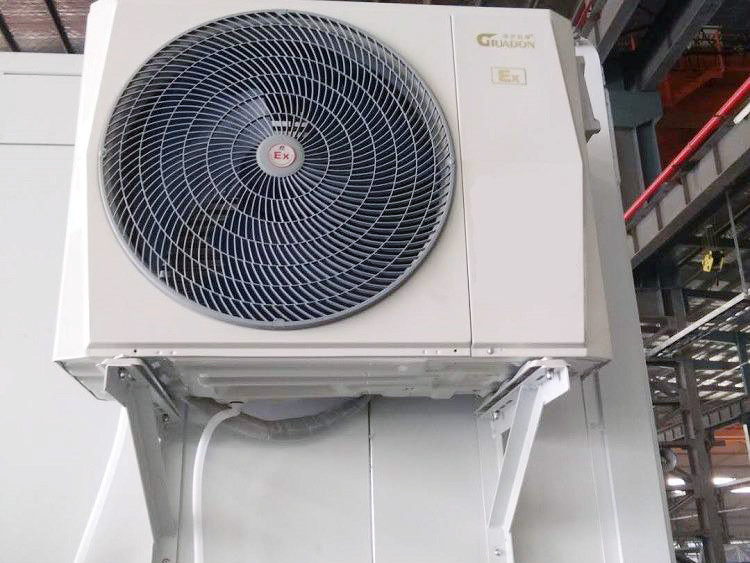
2. Caractéristiques structurelles et de performance
Les climatiseurs antidéflagrants se caractérisent par une structure robuste antidéflagrante, offrant une résistance supérieure à la corrosion, en particulier dans les environnements contenant des gaz corrosifs et explosifs. Ils sont équipés de compresseurs de marque internationale réputés pour leur faible niveau sonore et leur longévité. De plus, ils intègrent une conception composite antidéflagrante dotée de protections complètes contre la surchauffe et la surpression, garantissant ainsi une sécurité optimale face aux risques potentiels.
3. Fabrication et distribution
La fabrication et la distribution de climatiseurs antidéflagrants sont strictement réglementées et nécessitent une licence de fabrication, contrairement à leurs équivalents standard. Cela souligne le niveau accru de contrôle et les normes rigoureuses qui s'appliquent à la fabrication et à la vente de climatiseurs antidéflagrants.