Access our in-depth Knowledge Base to master hazardous location technologies. Read expert articles covering all Ex protection methods and safety norms.
The Function and Composition Structure of Explosion-Proof Signs
Definition: Compared to general industrial and domestic electrical equipment, explosion-proof electrical devices must have necessary markings to indicate...
Read more about The Function and Composition Structure of Explosion-Proof SignsThe Difference Between Explosion-Proof Level CT1 and CT2
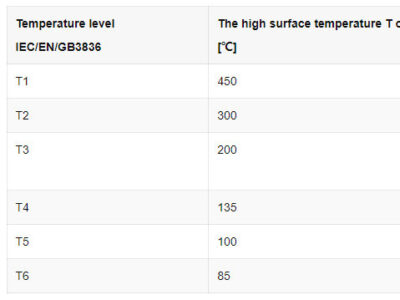
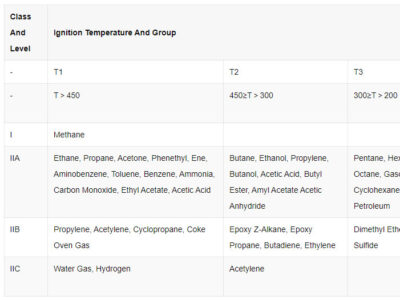
The distinction stems from varying temperature classifications, with surface temperatures arranged in descending order from T1 to T6.
Read more about The Difference Between Explosion-Proof Level CT1 and CT2What Does Explosion-Proof Level CT1 Mean
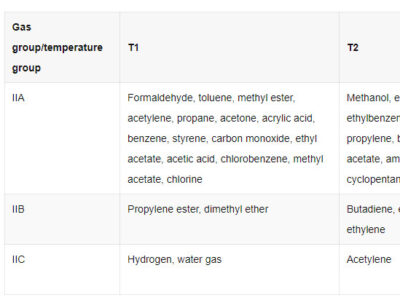
The correct classification is IICT1, which permits the use with IIC class explosive gases. The T1 classification specifies that the equipment's maximum...
Read more about What Does Explosion-Proof Level CT1 MeanIdentification of Explosion-Proof Signs
The main body of explosion-proof electrical equipment is clearly, durably, and distinctly marked. The nameplate is made of materials like bronze, brass, or stainless steel.
Read more about Identification of Explosion-Proof SignsExplosion-Proof Level BT5 and CT5
Both groups are classified under T5, which specifies that the maximum surface temperature for explosion-proof electrical devices must not exceed 100°C.
Read more about Explosion-Proof Level BT5 and CT5