


Core Technology Comparison Analysis
| Aspect | Explosion-proof Type | Intrinsically Safe Type |
|---|---|---|
| Definition | Broad concept | Energy-limiting type |
| Principle | Isolation protection | Intrinsic safety |
| Implementation | Multiple types | Circuit energy limitation |
| Applicability | Zone 1, Zone 2 | Zone 0, Zone 1, Zone 2 |
| Maintenance | Power-off required | Live maintenance allowed |
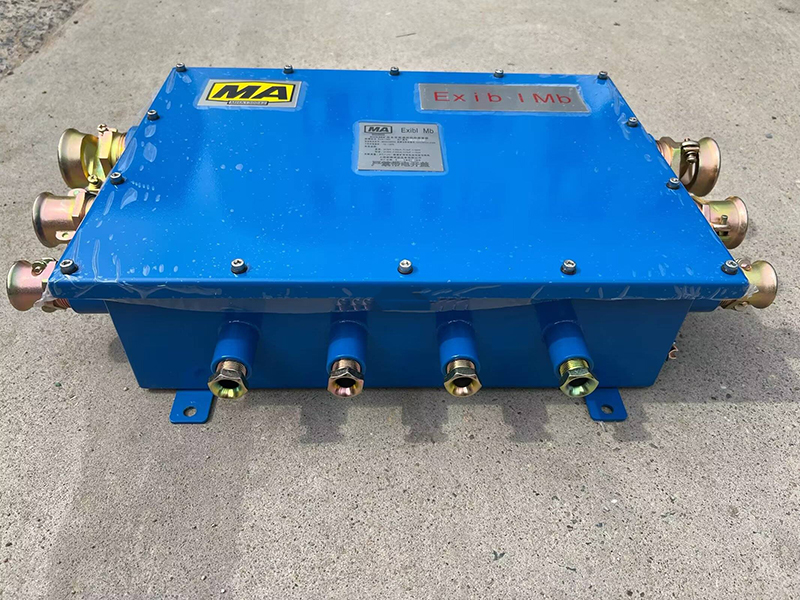
Explosion-proof Type Technology
Core Concept Differences
Definition Scope: All explosion-proof technologies are covered, including flameproof, increased safety, and pressurized types.
Implementation Method Comparison
- Typical Technical Features: Internal explosion pressures are withstood by the enclosure, and joint gaps are precisely controlled.
- System Composition: Independent equipment protection is provided, which is heavily relied upon structural integrity.
- Certification Standards: Overall equipment certification is required, and the “Ex” mark and type code are included in the label.
Application Feature Differences
- Applicable Environments: Zone 1 and Zone 2 are suited for the flameproof type, while non-explosive environments are strictly limited for the increased safety type.
- Equipment Types: High-power motors, distribution equipment, and lighting fixtures are typically classified in this category.
- Maintenance Features: Structural components are easily worn out. Complex maintenance procedures are required, and specialized training must be provided.
Intrinsically Safe Type Technology
Core Concept Differences
Definition Scope: Circuit energy is specifically limited as a unique implementation method within the explosion-proof system.
Technical Principles: Safe thresholds for voltage and current are established, ensuring that insufficient energy is generated for ignition.
Safety Philosophy: Essential energy safety is achieved, and the conditions for explosions are completely eliminated.
Implementation Method Comparison
- Typical Technical Features: Circuit parameters are strictly limited, and matching safety barrier equipment is paired.
- Certification Standards: System-level certification is conducted, and it is divided into ia, ib, and ic levels.
Application Feature Differences
- Applicable Environments: Zone 0 environments are uniquely suited for the ia level, while Zone 1 and Zone 2 are covered by the ib level.
- Equipment Types: Low-power sensors, signal transmission devices, and mobile detection equipment are commonly utilized.
- Maintenance Features: Electronic component reliability is considered critical, and long-term maintenance costs are significantly reduced.