Compare flameproof, intrinsic safety, increased safety, and other Ex methods. Read our objective Technical Comparisons to make the right choice. Explore.
The Function and Composition Structure of Explosion-Proof Signs
Definition: Compared to general industrial and domestic electrical equipment, explosion-proof electrical devices must have necessary markings to indicate...
Read more about The Function and Composition Structure of Explosion-Proof SignsThe Difference Between Explosion-Proof Level CT1 and CT2
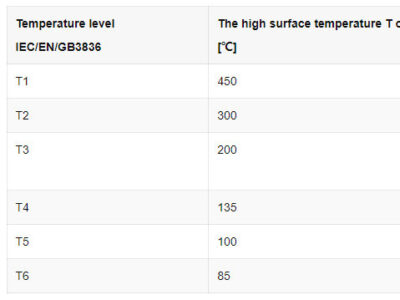
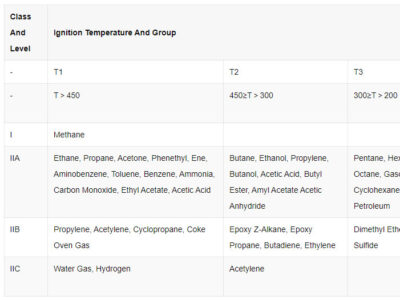
The distinction stems from varying temperature classifications, with surface temperatures arranged in descending order from T1 to T6.
Read more about The Difference Between Explosion-Proof Level CT1 and CT2Identification of Explosion-Proof Signs
The main body of explosion-proof electrical equipment is clearly, durably, and distinctly marked. The nameplate is made of materials like bronze, brass, or stainless steel.
Read more about Identification of Explosion-Proof SignsExplosion-Proof Level BT5 and CT5
Both groups are classified under T5, which specifies that the maximum surface temperature for explosion-proof electrical devices must not exceed 100°C.
Read more about Explosion-Proof Level BT5 and CT5Explanation of Explosion-Proof Signs
The explosion-proof marking in explosion-proof lighting fixtures is a label that describes the explosion-proof grade, temperature group, type, and...
Read more about Explanation of Explosion-Proof Signs