


An explosion-proof air conditioner is defined as cooling equipment equipped with explosion-proof capabilities. Not only are standard cooling, heating, and dehumidification functions provided, but its internal structure and control system are specially designed so that it can be safely operated in hazardous environments where flammable gases or combustible dusts are present. Thus, explosion accidents caused by electrical sparks are completely avoided.
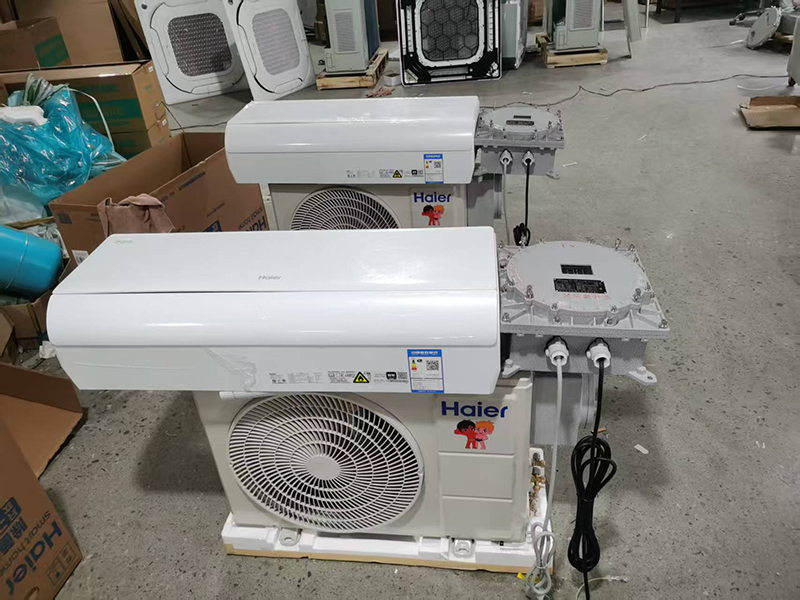
This type of air conditioner is widely applied in locations where flammable gases (such as methane and hydrogen), flammable liquid vapors, and combustible dusts (such as flour and coal dust) are present. Typical facilities include petrochemical plants, natural gas stations, oil depots, gas stations, underground coal mines, chemical laboratories, and flour processing plants.
Working Principles of Explosion-Proof Air Conditioners
The core of an explosion-proof air conditioner is determined by its explosion-proof structural design and safety protection technologies. The following critical aspects are primarily included:
Flameproof Design
Components that may generate electrical sparks (such as compressors and circuit boards) are strictly enclosed within high-strength flameproof enclosures. Even if an internal explosion is triggered, external flammable gases or dusts will not be ignited.
Intrinsically Safe Control Circuit
A low-voltage and low-current design is adopted for the control system. It is ensured that sparks or thermal energy sufficient to ignite hazardous substances will never be generated during operation.
Sealing and Anti-Corrosion Treatment
Excellent sealing performance is maintained by the equipment enclosure, by which the ingress of external harmful gases or dusts is prevented. Simultaneously, the surface is coated with corrosion-resistant materials so that the durability of the equipment in harsh environments is significantly enhanced.
Temperature Control and Overload Protection
Multiple safety protection mechanisms, such as high-temperature alarms, automatic power disconnection, and pressure protection, are equipped. Safety hazards caused by abnormal equipment operation are effectively prevented.
Advantages and Characteristics
Compared to standard air conditioners, the following significant advantages are exhibited by explosion-proof variants:
| Advantage Category | Key Characteristics |
|---|---|
| High Safety | Compliance with national explosion-proof standards (e.g., GB3836 series) |
| Strong Stability | Reliable operation in high-temperature, high-pressure, humid, and corrosive environments |
| Energy Efficient | Utilization of high-efficiency compressors and intelligent temperature control |
| Easy Operation | Support for remote control and automated adjustments |
Precautions for Selecting an Explosion-Proof Air Conditioner
When an explosion-proof air conditioner is selected, proper models should be chosen by users based on specific operating environments. The following technical points should be strictly noted:
- Confirm Explosion-Proof Rating: An air conditioner with a corresponding explosion-proof rating (such as Ex d IIB T4 or Ex d IIC T6 must be selected according to the types of hazardous gases or dusts present in the facility.
- Verify Certification Qualifications: Relevant certificates, such as explosion-proof certificates of conformity and production licenses issued by authoritative national institutions, must be legitimately possessed by the product.
- Brand and After-Sales Service: Manufacturers with extensive experience and technical strength should be chosen so that product quality and comprehensive after-sales support are guaranteed.
As industrial safety awareness is continuously raised, explosion-proof air conditioners have become indispensable equipment for numerous high-risk industries. Choosing an explosion-proof air conditioner with excellent performance and reliable safety is not only an optimization of the working environment but also a direct reflection of corporate responsibility.