 Shenhai Explosion-Proof

Stay informed with the latest news and updates in the explosion-proof industry from our comprehensive news center.
-

Must Galvanized Steel Pipe Be Used in Explosion-Proof Areas
Usage is essential. The Industrial and Civil Electrical Distribution Design Manual (3rd Edition) on page 489 specifies: In environments with explosive dust, the employment of insulated wires or plastic conduits for exposed installation is strictly forbidden. The recommended conduits are galvanized steel pipes, typically used in low-pressure fluid transport. These… -
Will Carbon Monoxide and Hydrogen Explode
A blend of carbon monoxide and hydrogen, in itself, does not result in an explosion; Yet, when this combined gas interacts with air or oxygen, any kind of ignition or encounter with a naked flame could trigger an explosion. -

Hydrogen Explosion-Proof Area Range
Areas like hydrogen generation rooms, hydrogen purification chambers, hydrogen compressor rooms, and hydrogen bottling areas, known for their explosive nature, are designated as Zone 1. Considering measurements from the perimeters of doors and windows in these rooms, the area extending to a 4.5-meter radius on the ground is identified as… -
Is Hydrogen Explosion-Proof Level CT1 or CT4
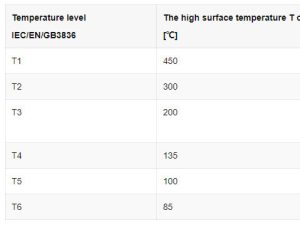
Typically, the explosion-proof classification for hydrogen zones is IIC grade. For T1 rated equipment, the highest surface temperature remains below 450°C. Given that hydrogen's ignition temperature reaches 574°C, opting for T1 is adequate. [table id=163 /] Being the lowest level in temperature classifications, any T-rating meets the criteria. Hence, in… -

Will It Explode if the Oxygen Concentration Is High
Oxygen, which aids in combustion, is not explosive in itself. However, when its concentration becomes exceedingly high, and combustible substances are evenly mixed with oxygen at specific proportions, they can burn vigorously in the presence of high heat or open flames. This intense burning causes a sudden expansion in volume,…