 Shenhai Explosion-Proof

Stay informed with the latest news and updates in the explosion-proof industry from our comprehensive news center.
-
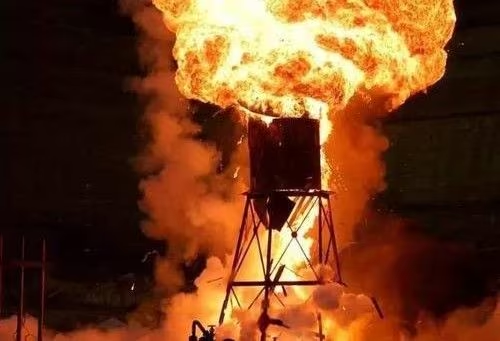
Combustible Gas Explosion Limit
In standard testing conditions, the concentration limit at which a combustible gas or vapor mixed with an oxidizing gas leads to an explosion is termed as the explosion limit. Commonly, the term 'explosion limit' refers to the concentration limits of combustible gases or vapors in air. The lowest concentration of… -
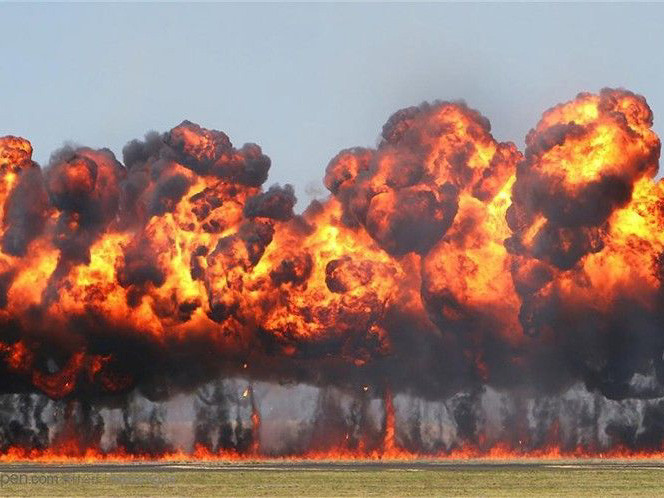
Combustible Gas Explosion Type
In explosive atmospheres, the combustion modes of combustible gases are crucial to understand. These include constant-pressure combustion, constant-volume combustion, deflagration, and detonation. 1. Constant-Pressure Combustion: This mode occurs in open settings where combustion products can dissipate, maintaining equilibrium with the ambient pressure. It's a stable process, free from pressure waves,… -
Flame Temperature Values of Common Combustible Gas Mixtures
Leveraging the principles of chemical thermodynamics and equilibrium, the adiabatic flame temperature for various fuels is calculated. This temperature differs across fuel types, but for many standard combustible gas mixtures, it hovers around 2500 Kelvin. [table id=217 /] -

What Is the Temperature of Dust Explosion
The explosion temperature of flour dust is only 400°C, comparable to that of combustible paper. Metal dust, on the other hand, can reach explosion temperatures as high as 2000°C, with ignition to explosion occurring in milliseconds. Dust explosions are several times more intense than gas explosions, with explosion temperatures ranging… -
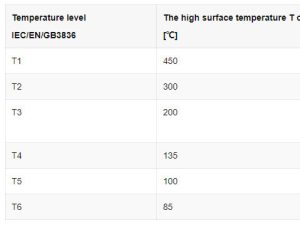
Which Is Safer Between Explosion-Proof Temperatures T1 and T6
In the field of explosion-proof equipment, the safety is significantly determined by the temperature classification of the device. The T6 classification, indicating the "maximum surface temperature," represents the safest category within this range. This classification ensures that the surface temperature of the equipment is low enough to prevent igniting flammable…