 Shenhai Explosion-Proof

Stay informed with the latest news and updates in the explosion-proof industry from our comprehensive news center.
-
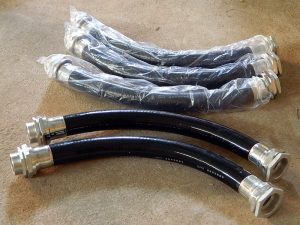
Explosion-Proof Flexible Conduit Model Meanings and Examples
Meaning: Models such as BNG and NGD are available, coming in various sizes like DN15, DN20, DN25, DN32, DN40, DN50, etc. Standard lengths include 500mm, 700mm, and 1000mm, with custom lengths available to meet specific site requirements. For instance, the model BNG (NGD)-B-G3/4x1000 features BNG or NGD to denote the… -
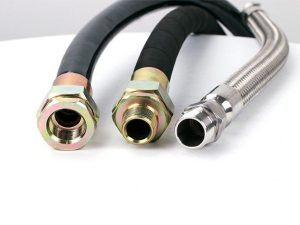
The Role of Explosion-Proof Flexible Conduit
Explosion-proof flexible conduits, although not commonly known, play a significant role in explosion-proof applications. Here’s an overview of their functions: Explosion-Proof Connectivity These conduits are designed for explosion-proof applications and are typically used in environments where flammable gases are present, serving also as connection lines between various electrical appliances. Strength… -

How to Classify Explosion-Proof Levels
Explosive gas environments are categorized into three levels—A, B, and C—based on the maximum experimental safe gap or the minimum ignition current required. [table id=216 /] Devices are organized into six temperature classifications, ranging from T1 to T6, determined by the maximum allowable surface temperature. -
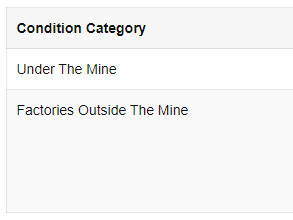
Explosion-Proof Level DII BT4 and DII CT4
The IIC classification exceeds the IIB classification and serves as a reference for designing electrical equipment in explosive environments. [table id=165 /] All devices fall under the T4 temperature classification, where the maximum allowable surface temperature is capped at 135°C. -
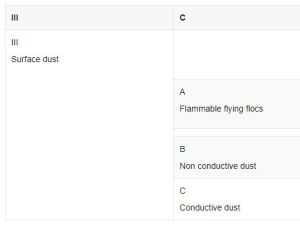
Explosion-Proof Level Db
Db represents a new national standard in explosion-proof markings and protection levels, specifically designed for devices in dust environments applicable to Zones 21 and 22. [table id=280 /] An example is DIP A21 TA T6 Db DIP, indicating a device for dust environments; if labeled as Ex, it indicates suitability…