 Shenhai Explosion-Proof

Product Encyclopedia
Explore our detailed product encyclopedia for in-depth knowledge about our explosion-proof offerings.
-
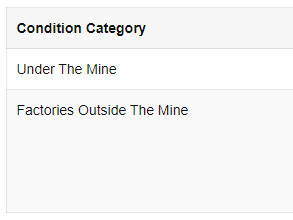
Explosion-Proof Level DII BT4 and DII CT4
The IIC classification exceeds the IIB classification and serves as a reference for designing electrical equipment in explosive environments. [table id=165 /] All devices fall under the T4 temperature classification, where the maximum allowable surface temperature is capped at 135°C. -
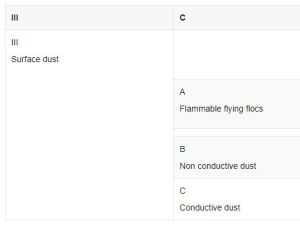
Explosion-Proof Level Db
Db represents a new national standard in explosion-proof markings and protection levels, specifically designed for devices in dust environments applicable to Zones 21 and 22. [table id=280 /] An example is DIP A21 TA T6 Db DIP, indicating a device for dust environments; if labeled as Ex, it indicates suitability… -
Explosion-Proof Level Da Db Dc
Gb: Specifies protection levels for Category 1 and 2 devices. Importantly, the updated explosion-proof markings further divide the flameproof category into da, db, and dc. [table id=288 /] da: Designed exclusively for catalytic sensors in combustible gas detectors, and is approved for use in Zone 0. db: A prevalent standard,… -

Explosion-Proof Zone 20 Corresponds to the Explosion-Proof Level
If an area requires the installation of dust explosion-proof electrical devices, the explosion-proof standards for equipment in Zone 20 must exceed those required for Zones 21 and 22. [table id=213 /] Specifically, in Zone 20, only intrinsically safe or encapsulated devices are permissible, while flameproof devices are not allowed. -
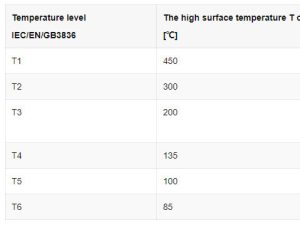
Explosion-Proof Level T6 Can Be Used with T2
Keep in mind that T2 is considered inferior, while T6 represents the optimal temperature classification! Hence, devices with a T6 explosion-proof rating are more than adequate for environments requiring T2 standards. [table id=163 /] T6 devices are designed to operate at temperatures not exceeding 85°C, compared to T2 devices, which…