 Shenhai Explosion-Proof

Performance Characteristics
Explore the key performance characteristics of explosion-proof equipment. Access specifications including protection ratings, product differences, and applications to make informed selection decisions.
-
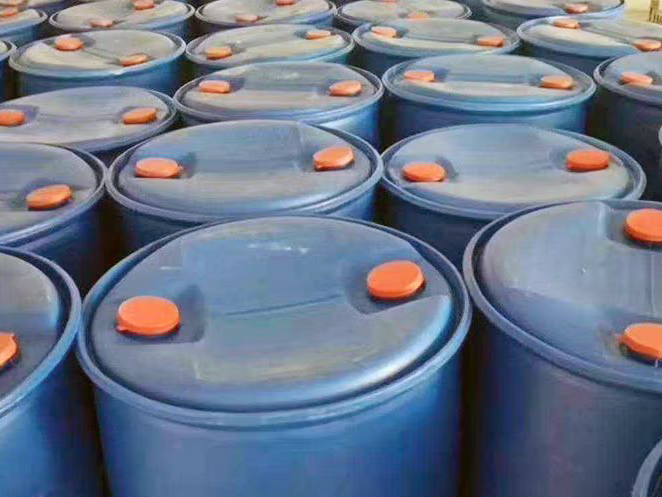
Does Glacial Acetic Acid Smell Strong
The scent of glacial acetic acid is exceptionally potent. It's a grave mistake to confuse it with ordinary vinegar, as it shares a similar aroma with ethyl acetate. This substance amalgamates all the disagreeable traits of acetic acid: a pungent smell, acidic undertones, and a peculiar, indefinable biological odor. It's… -

Is the Smell of Glacial Acetic Acid Harmful
Typically, mere inhalation of glacial acetic acid doesn't result in poisoning. Although this substance does possess a degree of toxicity, the predominant risk is associated with direct contact. Exposure to high concentrations can cause superficial skin burns. Specifically, when it transforms into vapor, it's imperative to evade direct inhalation or… -

Is Glacial Acetic Acid Flammable and Explosive
Glacial acetic acid is a substance with pronounced flammability and explosiveness. Its propensity to ignite, coupled with the explosive potential of its vapors when blended with air, underscores its danger. Contrary to common misconceptions that peg it as a primary ingredient in vinegar and not a perilous chemical, glacial acetic… -
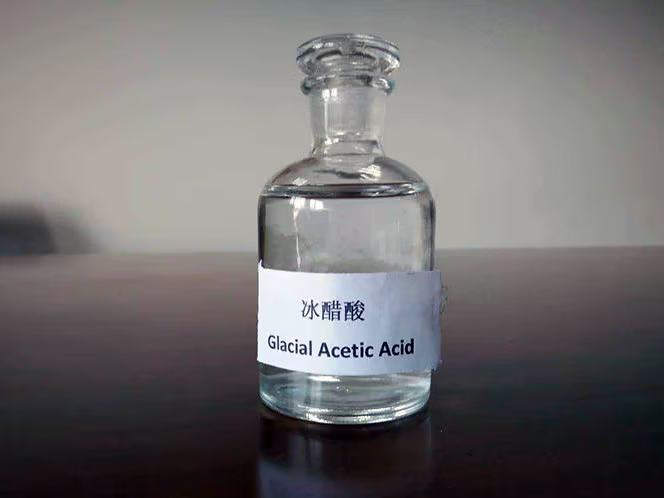
Is Glacial Acetic Acid Flammable
Acetic acid is, in fact, an organic substance comprised of carbon atoms. These carbon atoms are not in their highest oxidation state, as their average valency stands at zero. Therefore, with appropriate conditions, it can undergo oxidation by oxygen, indicating its capability to combust. -

Is Gunpowder a Flammable Substance
Matches fall under the category of flammable solids, and gunpowder is categorized as an explosive substance. Due to the necessity of an open flame for ignition, gunpowder doesn't qualify as a flammable material per se.