 Shenhai Explosion-Proof

Performance Characteristics
Explore the key performance characteristics of explosion-proof equipment. Access specifications including protection ratings, product differences, and applications to make informed selection decisions.
-
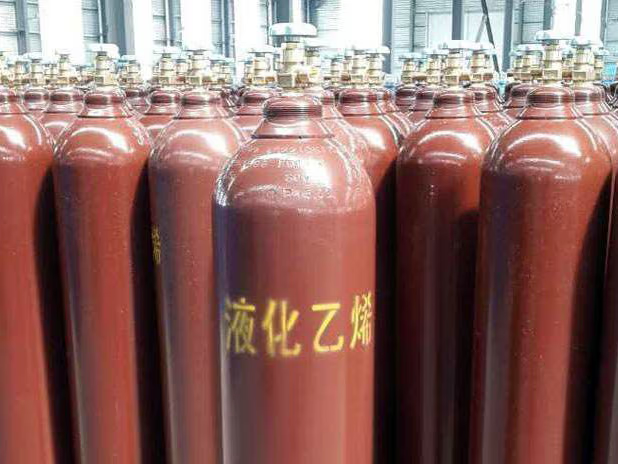
Is Ethylene Harmful to Humans
Ethylene poses significant health risks, primarily through acute toxicity and long-term detrimental effects. As a colorless and odorless gas at ambient temperature, ethylene is widely utilized in industrial processes and is also employed as a ripening agent for vegetables and fruits. -

Is Ethylene Oxide Gas Harmful to Humans
Ethylene oxide is recognized as a broad-spectrum and highly effective gaseous disinfectant, yet it poses significant harm to human health, exhibiting toxicity levels exceeding those of chloroform and carbon tetrachloride. Initially, it targets the respiratory tract, inducing symptoms such as nausea, vomiting, diarrhea, and pain, along with central nervous system… -

How Long Does It Take for Ethylene Oxide Residue to Disappear
Typically, the volatilization period for ethylene oxide post-sterilization exceeds 12 hours, with its evaporation rate being contingent upon the area and duration of sterilization. Should ethylene oxide be employed merely to eradicate a limited quantity of bacteria, the remaining ethylene oxide, unable to break down, will naturally take an extended… -

Can Xylene Be Mixed into Diesel
Certainly! Xylene is a chemical solvent belonging to the aromatic hydrocarbons category. Diesel, on the other hand, is a composite of alkanes, olefins, cycloalkanes, aromatics, and polycyclic aromatics. They are fully compatible and can be intermixed in any ratio without issue. -

Is Xylene Considered an Easily Explosible Chemical
Xylene is not listed in the 2011 edition of the "Catalogue of Chemicals Prone to Easy Explosion." Therefore, it is likely not classified as a chemical prone to easy explosion.