 Shenhai Explosion-Proof

Performance Characteristics
Explore the key performance characteristics of explosion-proof equipment. Access specifications including protection ratings, product differences, and applications to make informed selection decisions.
-
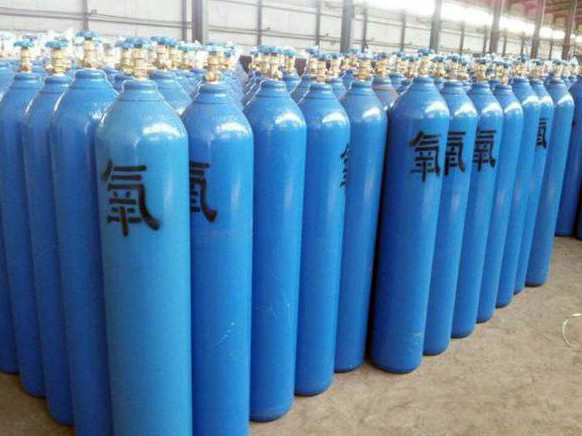
What Is the Maximum Safe Temperature for Oxygen and Acetylene Tanks When Exposed to Direct Sunlight
The temperature to avert explosive risks for oxygen and acetylene cylinders in sunlight exposure should be maintained under 40°C. This guideline is stipulated in TSGR0006-2014, the official Safety Technical Supervision Regulations for Gas Cylinders. For further information, see point 6 under section TSG6.7.1. -

Why Is the Temperature of Acetylene Flame so High
In the category of simple hydrocarbons, although acetylene's combustion heat is not exceptionally high, it generates considerable heat when burned in the presence of liquid water, typically gauged using gaseous water. Due to the limited water production during acetylene combustion, there is minimal heat absorption by vaporization, thereby leading to… -
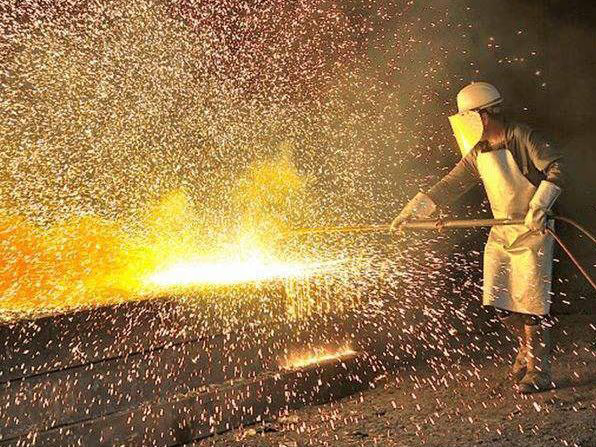
Which Is Higher: The Temperature of Acetylene or Liquefied Gas
Acetylene flames are characterized by their high temperatures. During combustion, acetylene produces intense heat, with oxy-acetylene flame temperatures reaching approximately 3200°C. This makes it ideal for applications such as metal cutting and welding. Acetylene, chemically represented as C2H2 and also known as carbide gas, is the smallest member of the… -
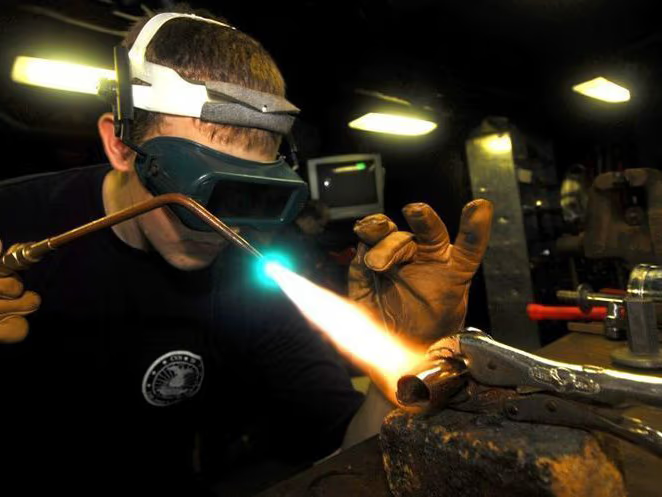
What Is the Flame Temperature of an Acetylene Cutting Torch
The flame temperature of an oxy-acetylene torch must exceed 3000°C. This torch is utilized for metal cutting and welding tasks. It generates a high-temperature flame through the combination of oxygen, with a purity range of 93.5% to 99.2%, and acetylene, effectively melting the metal. -
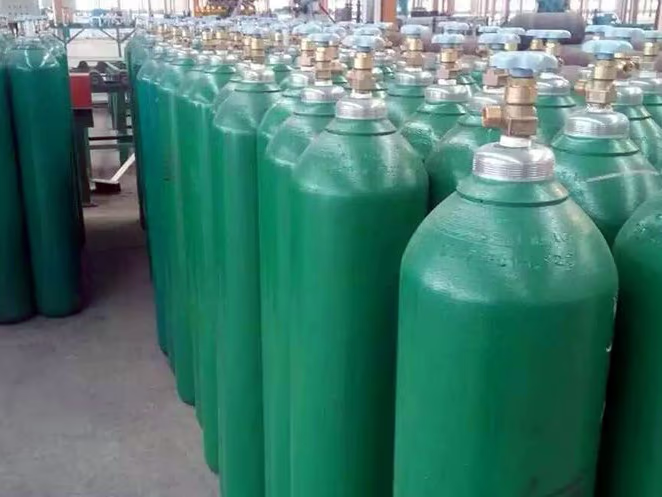
Which Is More Dangerous: Hydrogen or Acetylene
Acetylene has an explosive limit spanning from 2.3% to 72.3%, whereas hydrogen's explosive limit extends from 4% to 74.2%. Given that acetylene's explosive range is wider than hydrogen's, it renders hydrogen comparatively more hazardous.